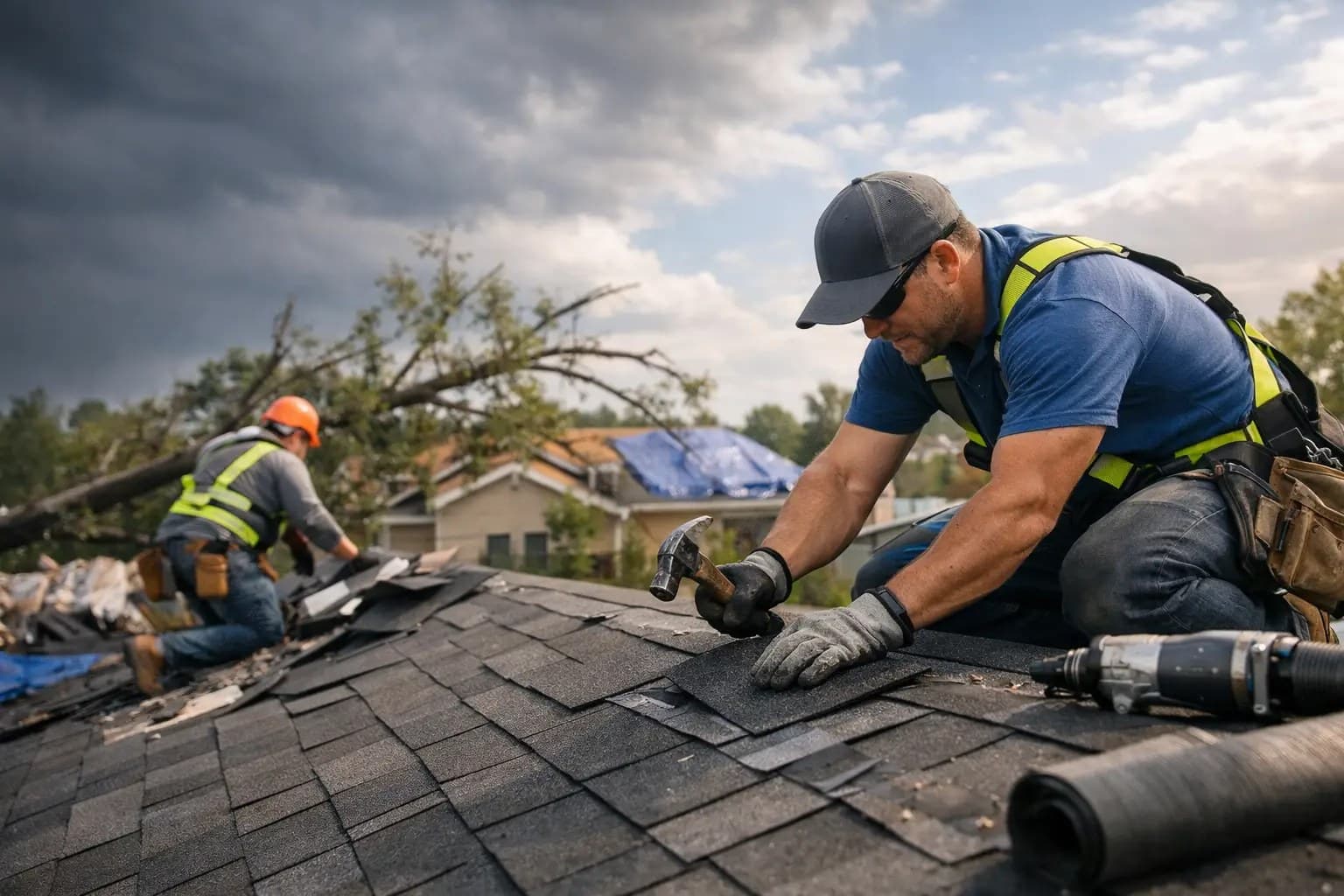
Storm damage to your residential or commercial asphalt roofing system can be both distressing and costly. The aftermath of severe weather events can leave your roof vulnerable to leaks, structural damage, and other potentially devastating issues. At Roofs R Us, we understand the challenges and concerns property owners face when dealing with storm damage. Our team of experienced professionals is dedicated to providing prompt and efficient storm damage restoration services, ensuring that your property is repaired and protected as quickly as possible. Based in Blaine, MN, our expertise extends beyond asphalt roofing to include soffit and fascia repair, seamless gutter installation and maintenance, and reliable storm damage assessments and solutions.
In this article, we will discuss the steps involved in storm damage roof restoration, from identifying damage and reporting the loss to repairing or replacing damaged components and safeguarding your property against future weather events. Furthermore, we will outline how partnering with a reputable roofing expert like Roofs R Us can ensure a smooth and worry-free restoration process, providing you with peace of mind and confidence that your property is well-protected and capable of withstanding the unpredictable forces of nature.
1. Identifying Storm Damage on Your Roof
Recognizing the signs of storm damage is the first crucial step in the restoration process. In this section, we’ll discuss how to identify damage to your residential or commercial asphalt roofing system.
Hail Damage
Hail can leave dents or cracks in your asphalt shingles, leading to potential leaks and other problems. Look for impact marks, cracked or missing granules, and damaged roof vents or flashings.
Wind Damage
Strong winds can loosen, lift, or even remove shingles from your roof, exposing your property to water damage. Thoroughly inspect your roof for loosened, curling, or missing shingles, and assess the condition of your soffits, fascia, and gutters.
Water Damage
Water damage can result from cracks, leaks, or pooling water on your roof. Examine your roof for wet spots, discoloration, and compromised flashing or sealants, as well as signs of water intrusion in your attic or interior spaces.
2. Reporting a Storm Loss
A storm loss brings a process with it, and knowing who does what makes it less stressful. Here is the order the Minnesota Department of Commerce sets out for homeowners, and where a roofing contractor fits into it.
Document the Damage
Take detailed notes and photographs of the damaged areas, keeping a record of the date and extent of the damage. This documentation will provide valuable evidence when filing your insurance claim.
Report the Loss to Your Agent or Carrier
The Minnesota Department of Commerce says the first step after a loss is to call your insurance agent and report it, or the insurance company directly if you do not have an agent. Its full homeowner guidance is at mn.gov/commerce. Any question about timing, coverage or your duties under the policy belongs with them, not with a roofing contractor.
Work with a Reputable Roofing Expert
Partner with a reliable and experienced roofing service like Roofs R Us to provide a thorough assessment and estimate of necessary repairs or replacements. What they give you is a written record of the building: photographs of specific locations, findings slope by slope, and an itemized estimate. Minnesota Statute 325E.66 keeps a residential contractor out of policy interpretation, coverage advice and claim adjusting, so the record is the contribution.
3. Repairing and Restoring Your Roof Post-Storm Damage
Once you know what you are doing and have chosen a contractor, the repair and restoration work can begin. Trusting a professional roofing service like Roofs R Us is essential to restoring your roof efficiently and effectively.
Assess Damage and Create a Plan
Your roofing expert will conduct a meticulous inspection to determine the extent of the damage, and devise a comprehensive plan to address the necessary repairs or replacement.
Conduct Necessary Repairs
After planning, your roofing professional will execute the restoration process by repairing or replacing damaged shingles, flashing, vents, soffits, fascia, or gutters, ensuring a watertight and robust roofing system.
Quality Assurance and Warranties
Roofs R Us stands by our work with extensive warranties and quality assurances, giving you the peace of mind that your property’s roofing system is in the best possible condition.
4. Protecting Your Roof against Future Storm Damage
Preventative measures can help minimize the potential for future storm damage. Here are some strategies to protect your roof and property.
Regular Roof Inspections and Maintenance
Regular inspections and maintenance by a trusted roofing expert can catch potential issues before they become major problems, helping prevent storm damage by keeping your roofing system in optimal condition.
Invest in Upgraded Roofing Materials
When repairing or replacing your roof, consider upgrading to more resilient materials that can better withstand severe weather events. Discuss your options with your roofing professional to choose the best solution for your property.
Optimize Water Management
Gutter systems play a significant role in managing water from storms. Ensure your gutters are well-maintained, and consider upgrading to seamless gutters for improved efficiency and durability.
Conclusion
Storm damage restoration is a multi-step process that requires expertise, patience, and a proactive approach. By partnering with a professional roofing contractor like Roofs R Us, you can ensure that your property’s roofing system is efficiently repaired and better equipped to withstand future weather events. Our team specializes in residential and commercial asphalt roofing, soffit and fascia repair, and seamless gutter systems, providing comprehensive and reliable solutions to all your storm damage restoration needs. Contact Roofs R Us today to schedule a consultation and receive the professional guidance and support you need to navigate this challenging process.
← Back to all posts