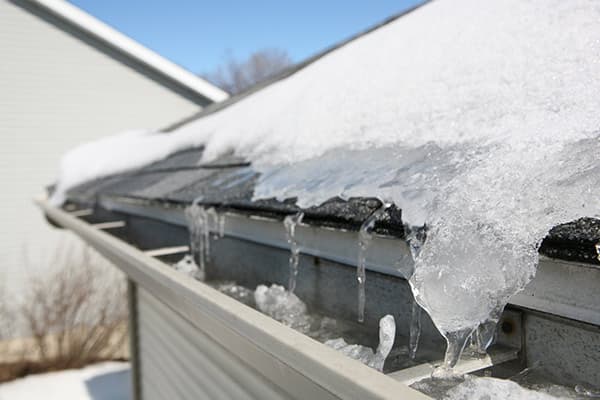
Every February I get the same call. "There's two feet of snow on my roof. Is it going to cave in?"
Almost always, no. A house built to code in the Twin Cities carries far more snow than most winters put on it. But "almost always" is not "always," and the same snow that will never collapse your roof will happily build the ice dam that ruins your ceiling. So the question is worth answering properly: how much snow a roof can hold, what to watch for, and when a roof rake is worth the effort.
I'm Luke. We handle ice dams and winter roof work across Blaine, Andover, Minneapolis, and St. Paul, and we have looked at a lot of sagging garages in March. Here is the straight version.
Need this handled? See our ice dam removal service.
Ice Dam Removal in the Twin CitiesThe number: 35 pounds per square foot
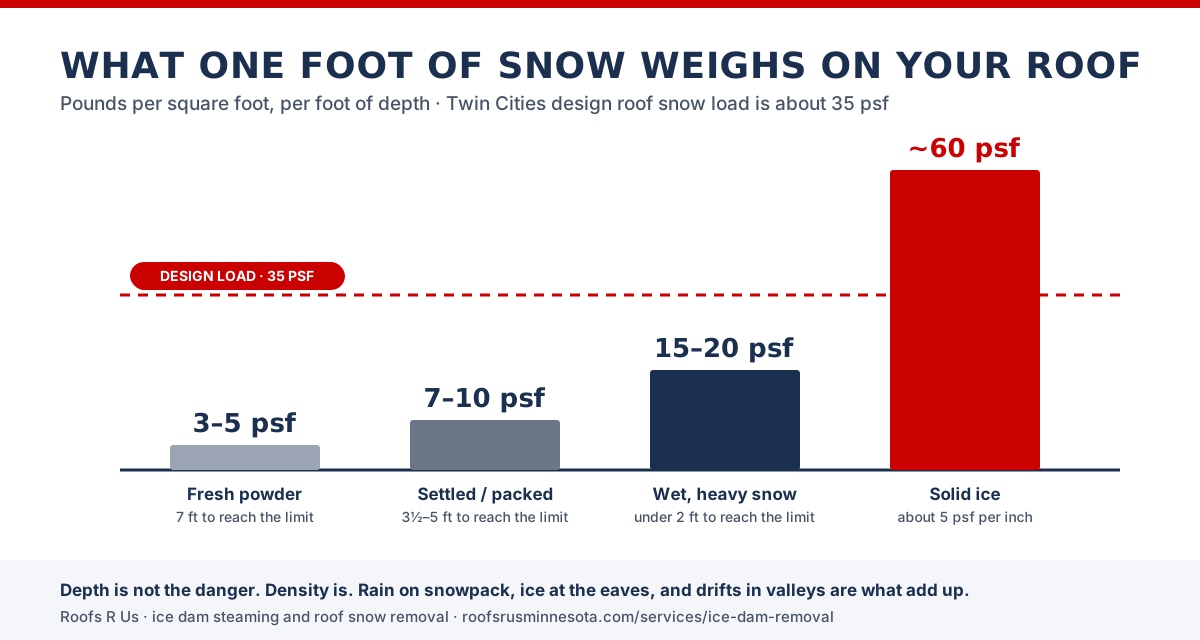
Minnesota's building code sets a ground snow load of 50 pounds per square foot for the Twin Cities metro. Roofs are designed for about 70 percent of that, which works out to a design roof snow load of roughly 35 pounds per square foot. Northern Minnesota is higher, around 42. That is the structural minimum for a house built to code, and it includes a safety margin on top.
So the practical question is: how much snow weighs 35 pounds on a square foot of roof?
Fresh, fluffy snow weighs roughly 3 to 5 pounds per square foot for every foot of depth. You would need six or seven feet of powder to get near the limit. That does not happen on a pitched roof.
Settled or packed snow weighs more like 7 to 10 pounds per square foot per foot of depth. Three to four feet of it approaches the design load.
Wet, heavy snow, the March kind, can run 15 to 20 pounds per square foot per foot. Two feet of that is real weight.
Ice is the one to respect. It weighs about 5 pounds per square foot per inch. A three-inch ice layer at the eaves is 15 pounds on top of whatever snow is sitting on it.
Rain on snow is the worst case. Snowpack soaks up rain like a sponge and holds it. A foot of settled snow that takes an inch of rain can jump 5 pounds per square foot in an afternoon.
The pattern is obvious: depth is not the danger. Density is. A roof with three feet of powder is fine. A roof with a foot of slush under a rain event, plus an ice dam, plus a drift in the valley, is the one to think about.
Where the weight actually piles up
Snow does not sit evenly on a roof, and the code number is an average. The places that carry more:
Valleys and behind dormers. Wind drops snow where the roof geometry breaks. A valley can hold three times the depth of the open slope beside it.
Lower roofs next to higher ones. A one-story garage or porch tucked below a two-story section gets everything that slides or blows off the higher roof. This is the classic Minnesota collapse: not the house, the attached garage.
Low-slope and flat sections. Snow that cannot slide just accumulates. Additions, three-season rooms, and covered entries built at a 2/12 pitch are the ones I worry about.
North-facing slopes. Less sun, slower melt, denser pack by March.
Older outbuildings. Detached garages, sheds, and pole buildings from before the current code, or built without a permit, may not have been designed to 35 psf at all.
If your house has any of those, that is the section to watch, not the main roof.
The warning signs of an overloaded roof
You will usually get a warning before a structural failure. These are the ones that matter, roughly in the order they appear:
- Doors and windows that suddenly stick or will not latch, especially interior doors upstairs. The frame is being pushed out of square.
- New drywall cracks at the corners of door and window openings, or where walls meet the ceiling.
- Creaking, popping, or cracking sounds from the attic or ceiling, particularly at night when the temperature drops.
- A visible sag in the ceiling, or a roofline that looks dipped between the trusses when you stand across the street.
- Sprinkler heads, light fixtures, or ceiling fans that look off-level.
- Trusses or rafters in the attic that show fresh cracks, bowing, or separated gusset plates.
If you see any of the last three, get people and pets out from under that section and call for professional removal that day. Do not send anyone onto the roof.
Should you rake your roof?
Here is my honest answer. For structure, on a properly built house, almost never. For ice dams, often yes.
Ice dams form because heat leaks from the house into the attic, melts the snow on the upper roof, and the meltwater refreezes when it reaches the cold overhang past the exterior wall. The ridge of ice then backs up water under the shingles. Our ice dam prevention guide covers the real fix, which is air-sealing, insulation, and ventilation.
But in the middle of January, the fastest way to slow a dam is to remove the fuel: the snow on the bottom three to four feet of the roof. No snow at the eave, no meltwater to refreeze there. That is what a roof rake is for.
How to rake without wrecking your shingles:
- Stay on the ground. A roof rake is a long pole for a reason. Never get on a snow-covered roof, and never lean a ladder against a gutter full of ice.
- Use a rake with rollers or bumpers that hold the blade a half-inch off the shingles.
- Pull straight down the slope. Do not chop sideways, do not chip at ice.
- Do the bottom three to four feet only, all the way along the eave. You are not clearing the roof, you are clearing the cold zone.
- Leave an inch or two of snow on the shingles. Scraping to bare asphalt in January strips granules off brittle shingles.
- Do it after each significant snowfall, not once at the end of winter when it is already ice.
- Watch the power lines and where the snow will land. It comes down heavy.
If your ice dam has already formed and water is coming in, raking will not fix it. That is when you call for steaming, which is the ice dam removal service we run all winter. Steam melts the dam without touching the shingles. Chipping with a hatchet, which I still see every year, cracks shingles and voids warranties.
When to call instead of rake
Call a professional for snow removal when:
- Any of the overload warning signs above are showing
- You have a low-slope or flat section holding more than a foot of dense snow, especially after rain
- Drifts in a valley or against a wall are several feet deep
- The roof is two stories, steep, or the eaves are over a walkout or deck you cannot rake from
- You have a history of ice dams and water has already come in
We tie off, we work from the roof with plastic shovels and steam, and we leave a protective layer of snow on the shingles. It costs more than a rake. It costs less than a ceiling, or a fall.
The upstream fix
If you are raking every year and steaming most winters, the roof is telling you something. The snow on your neighbor's roof is not melting out of sequence because their attic is cold. Yours is warm.
Air-seal the attic bypasses, get the insulation to R-49 or better and even out to the eaves, balance soffit intake with ridge exhaust, and most of this goes away. That work is often less than two seasons of steaming. Our attic ventilation guide and winter roof maintenance checklist walk through it, and if the roof is due, a replacement with ice-and-water shield to code and correct ventilation is the permanent answer.
Worried about the load on a garage or a low-slope addition, or already seeing water at the ceiling? Call us for roof snow removal or ice dam steaming, and if you want the problem gone for good, ask for the attic assessment while we are there. Before the snow flies, run through the Minnesota gutter winter prep checklist so the eaves start the season clear.
← Back to all posts