Here is the short version. If you live anywhere in the north metro and you are replacing your roof anyway, a Class 4 impact-resistant shingle is one of the few upgrades that changes how the roof holds up: it is built to take a harder hit, and it tends to still be sealed and tight when a standard roof beside it is on its second replacement.
It is not the right call for every house. This guide walks through what the rating actually means, what it adds to the bill on a typical Twin Cities home, where the insurance question belongs, and who should save the money.
I'm Luke. We put on a lot of roofs in Blaine, Coon Rapids, Andover, and Ham Lake, and since the June 19 hail event this is the question I get on nearly every estimate.
Need this handled? See our roof replacement service.
Roof Replacement in the Twin CitiesWhat "Class 4" actually means
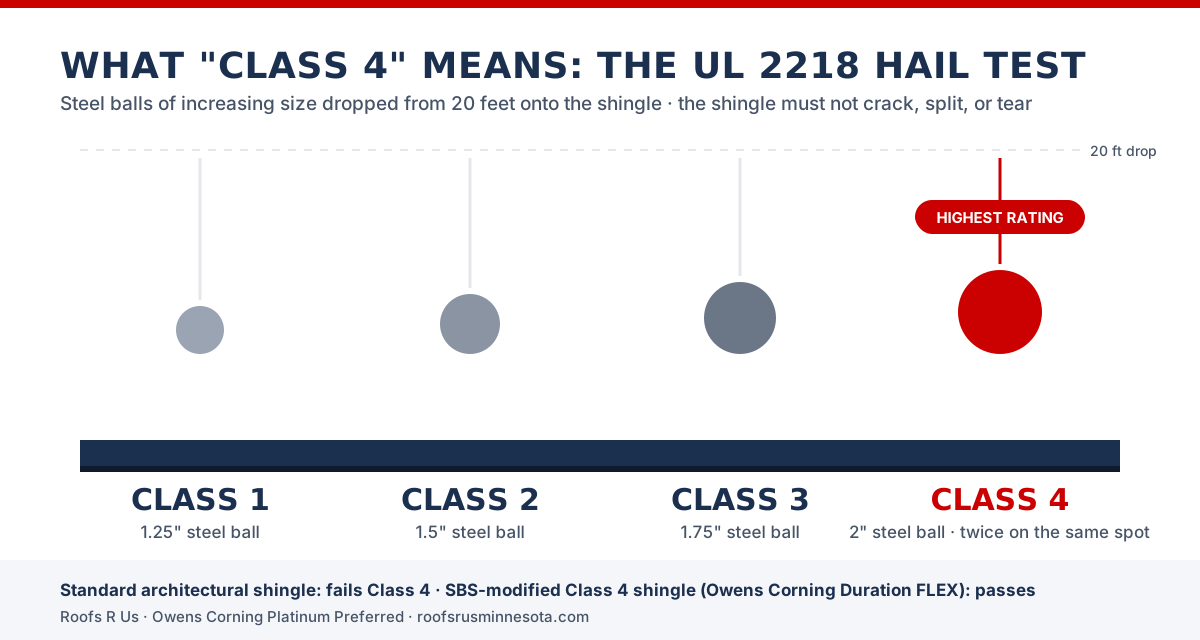
The rating comes from a test called UL 2218. A lab drops steel balls of increasing size onto a shingle from a set height. Class 1 is a 1.25-inch ball. Class 4, the top of the scale, is a 2-inch steel ball dropped from 20 feet, twice on the same spot. To pass, the shingle cannot crack, split, or tear on the back side.
A standard architectural shingle fails that test. The asphalt is stiff, and when a 2-inch stone lands on it the fiberglass mat underneath fractures. You cannot see the fracture from the ground. What you see, a year or two later, is a shingle shedding granules and a leak that shows up in the spring thaw.
Class 4 shingles pass it because the asphalt is different. The good ones use an SBS polymer, essentially a rubber, blended into the asphalt so the shingle flexes when it takes a hit instead of breaking. Owens Corning Duration FLEX is the one we install most. Same look as the Duration you see all over the north metro, same SureNail strip, same 50-year Platinum Protection warranty when we register it. The difference is what happens when hail lands on it.
One thing to be honest about: UL 2218 is a lab test with a steel ball at room temperature. Real hail is irregular, comes in sideways on 60 mph wind, and lands on a shingle that has already been through eight Minnesota winters. Class 4 survives the vast majority of what falls on the Twin Cities. It is not bulletproof, and any roofer who tells you a Class 4 roof will never need a claim is overselling.
Why the rating matters more here than most places
The north metro sits in real hail country. Anoka County and the northern edge of Hennepin take multiple hail events in a normal year, and the ones that make the news, like June 19, drop 2-inch stones across whole subdivisions. That is exactly the size Class 4 is tested against.
It also matters for the simpler reason that a roof which survives a storm is a roof you are not thinking about. The value of an impact-resistant shingle in a hail corridor gets measured in the seasons you do not spend arranging repairs, tarping a slope and living around a project.
What the upgrade costs on a Twin Cities home
Labor is the same. Tear-off, disposal, ice-and-water shield at the eaves, synthetic underlayment, drip edge, flashing, ridge vent, and cleanup cost exactly what they cost with a standard shingle. Only the shingle bundles change.
On a typical Blaine-area replacement, which we see run $12,000 to $19,000 for an architectural shingle, the Class 4 upgrade usually adds somewhere around 10 to 20 percent to the shingle portion of the job. On most homes that is a low-four-figure number, not a second roof. Get both options on the same line-item estimate. If a contractor can only give you one number for "impact resistant," you are not seeing the actual difference.
The cheapest moment to upgrade is when the roof is coming off anyway. Tear-off, disposal and labor do not change with the shingle grade, so the gap between a standard architectural shingle and a Class 4 product is close to the material difference alone. We write the upgrade as its own line on the estimate so you can see exactly what it adds.
The insurance question, and where it belongs
Many Minnesota carriers offer some form of credit for an impact-resistant roof, and it is a fair thing to ask about before you choose a shingle. It is not our question to answer. We are a roofing contractor, we are not licensed to advise you on coverage or premiums, and we will not guess at what any policy does.
Call your own agent or your carrier, ask what an impact-resistant roof would mean for you, and get their answer in writing from them. The Minnesota Department of Commerce publishes plain guidance for homeowners at mn.gov/commerce.
What we can tell you is the construction side, and we will happily go through all of it: which Class 4 products we install, what the upgrade costs on your particular roof, how the shingle is fastened, and how it behaves after fifteen Minnesota winters.
Who should skip it
Class 4 is not a universal upgrade, and I would rather tell you that than sell you one.
You are selling within a few years. Buyers will pay for a new roof. Very few pay extra for a Class 4 roof. If the house is going on the market, the standard Duration is the better spend.
Your roof is small and simple. On a modest rambler the total material difference is smaller, so there is less to gain from the upgrade either way.
Your ventilation or deck is the real problem. A Class 4 shingle over a roof that runs 140 degrees in August because the attic cannot breathe will still cook from underneath. Fix the attic ventilation first, or with the roof, or the shingle rating does not matter.
You are patching, not replacing. You cannot mix Class 4 shingles into a standard field and get a rating or a discount. It is a whole-roof decision.
Class 4 and the rest of the system
The rating is on the shingle. The roof is a system. On every Class 4 install we still run ice-and-water shield at the eaves and valleys, use a synthetic underlayment across the field, replace pipe boots and flashing rather than reuse them, and make sure intake at the soffit matches exhaust at the ridge. Skip any of those and you have a hail-proof shingle over a roof that leaks at the chimney.
Those are cheap to replace and they matter, because soft metal is where a storm leaves its clearest fingerprint. A dented gutter apron tells you the hail was real even when the shingles look untouched from the ground.
Want to see both numbers side by side? Request a free estimate and we will bring the standard Duration and the Duration FLEX pricing to the same appointment, along with the product documentation your agent may ask you for. If you are comparing shingle lines first, start with our Duration vs. Oakridge comparison or the best roofing material for Minnesota guide.
← Back to all posts