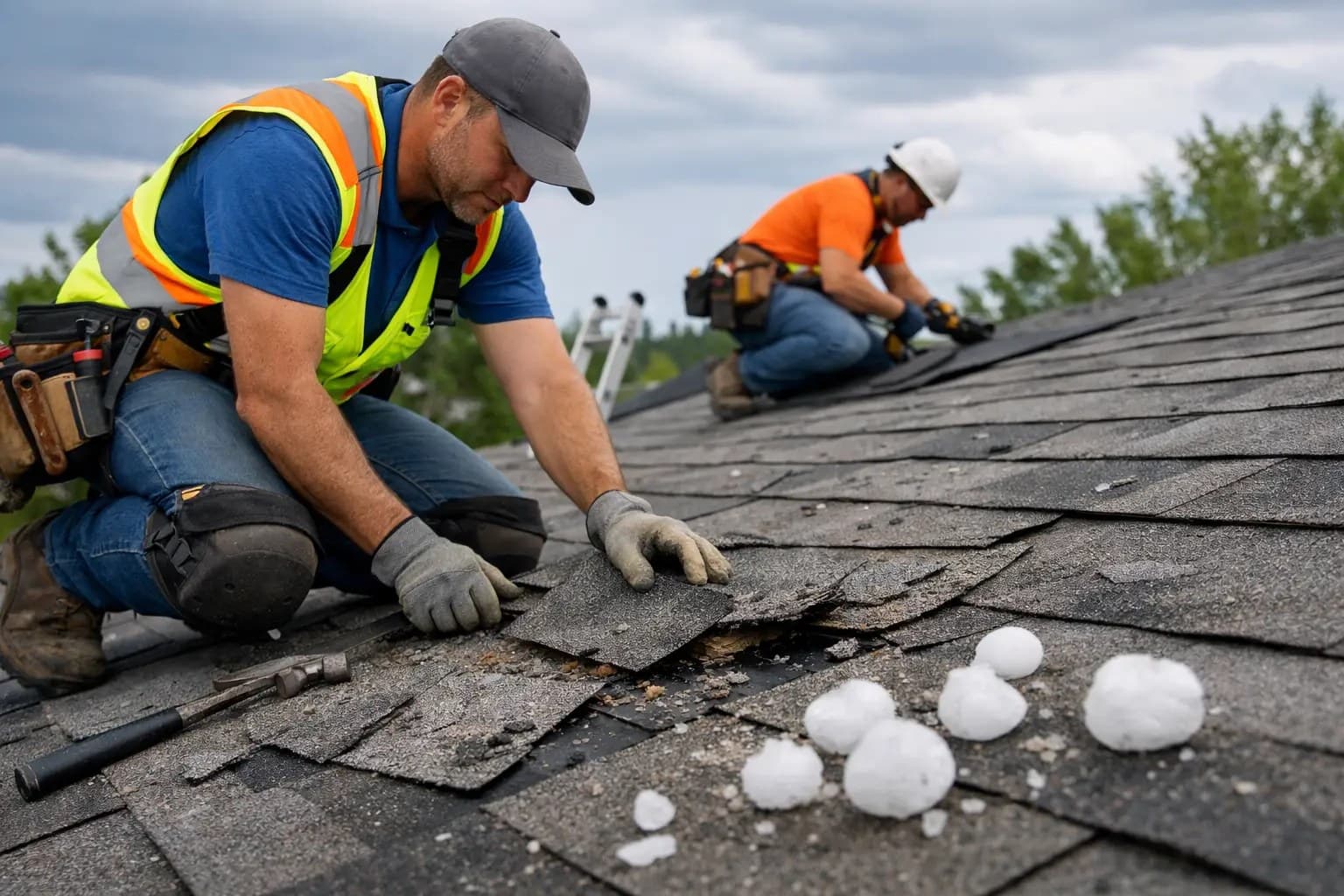
A hailstorm can be over in 15 minutes and leave behind damage that affects your roof for years. That is what makes hail damage roof repair tricky. The problem is not always the obvious dent in a gutter or the shingle you can see from the driveway. In many cases, the real damage is subtle, and if it is missed early, it can turn into leaks and a shortened roof life.
For homeowners and property managers, the first question is usually simple: do we need a repair, or is this heading toward a full replacement? The honest answer is that it depends on the age of the roof, the roofing material, the severity of the storm, and whether the damage is isolated or widespread. A proper inspection matters because hail can weaken a roofing system long before water starts showing up inside.
What hail damage roof repair actually covers
Hail damage roof repair is not one single fix. It can range from replacing a handful of compromised shingles to correcting flashing damage, addressing punctures, repairing ridge caps, or replacing other exterior components that took the impact. On commercial roofing systems, the scope can also include membrane repairs, seam work, and drainage-related corrections.
The key is to focus on functional damage, not just cosmetic marks. A small dent may not affect performance. A granule loss pattern on asphalt shingles, bruising that breaks the mat, or damage around vents and flashing is different. Those issues can reduce the roof’s ability to shed water and withstand future weather.
That distinction matters when you are deciding what comes next. Some roofs can be restored with targeted repairs and continue performing well for years. Others have damage spread across too many areas to justify patchwork.
Signs your roof may need hail damage roof repair
Not all hail damage is visible from the ground, but there are clues worth paying attention to after a storm. If you notice dents on downspouts, soft metal vents, gutters, or garage doors, that tells you the storm had enough force to affect roofing materials too.
Inside the building, water stains on ceilings, damp attic insulation, or a new musty smell can point to roof system damage. Outside, missing granules in gutters, cracked shingles, exposed fiberglass mat, split wood shakes, or punctures in softer roofing materials are all warning signs.
Age matters here as well. A newer roof may handle a moderate hail event with limited repair needs. An older roof that was already losing granules or becoming brittle may sustain much more serious damage from the same storm. That is why two neighboring homes can experience the same weather and need very different solutions.
Why hidden damage gets missed
One of the biggest issues with hail is that hidden damage often looks minor at first. Asphalt shingles can develop bruising where the surface appears mostly intact, but the underlying mat has been compromised. Metal components may show impact marks that seem cosmetic, yet flashing seals can loosen over time. On flat or low-slope commercial systems, membrane damage may be hard to identify without a trained inspection.
This is where experience makes a difference. An expert inspection does more than confirm that hail hit the property. It helps determine whether the roof still has reliable service life left or whether the storm accelerated failure in ways that will show up later.
Repair or replacement: how the decision is made
A trustworthy contractor should not default to replacement if a repair is enough. At the same time, they should not recommend a small fix when the roof has broad storm damage that will keep causing issues. The right recommendation comes from the condition of the entire roofing system.
If hail damage is limited to a specific section, the shingles are still available, and the surrounding materials are in solid shape, repair may be the most practical option. It can restore protection, control costs, and avoid disturbing the rest of the roof.
Replacement becomes the stronger option when damage is widespread, matching materials are no longer available, or the roof was already near the end of its life. In those cases, repeated repairs can become more expensive over time and leave the property with uneven performance. For many Minnesota property owners, this is not just about fixing storm damage. It is about making sure the roof can handle the next season of hail, wind, snow, and ice.
What to expect during the repair process
The repair process should start with a thorough inspection and a clear explanation of the findings. You should know what was damaged, what can be repaired, what should be monitored, and whether there are related exterior issues with gutters, soffit, fascia, or siding.
From there, the scope of work should be specific. Vague language creates problems later. A dependable estimate should explain the repair areas, the materials being used, and whether the pricing is locked. That matters when storm damage projects start moving and property owners are trying to make decisions quickly.
Once work begins, quality installation is what protects the result. Hail repair is not just about swapping visible materials. It has to restore the roof’s weather resistance, maintain proper sealing, and address the vulnerable transitions where leaks often start.
Why the documentation matters
Photographs of specific locations, inspection notes, material counts and a plain written assessment are what a roofing contractor actually contributes after a hailstorm. They tell you what is up there, which is the thing you cannot see from the driveway.
A good report separates what the storm did from what age did, because both usually sit on the same roof. If the damage is cosmetic or limited, it should say that too. Overstating damage to chase a bigger job creates its own problems.
What that record means on the insurance side is not ours to say. Under Minnesota Statute 325E.66 a residential contractor may not interpret policy provisions, advise you about coverage or duties under a policy, or adjust a claim, unless also licensed as a public adjuster. Those questions belong with your agent or your carrier, and the Minnesota Department of Commerce publishes homeowner guidance at mn.gov/commerce.
Why quick action matters after a hailstorm
Waiting too long can make a simple repair more complicated. Once damaged shingles lose protective granules or flashing starts to separate, the roof becomes more vulnerable to wind-driven rain, freeze-thaw cycles, and long-term moisture intrusion. What starts as storm damage can turn into deck rot, insulation issues, interior staining, or mold concerns.
There is also a practical side to timing. Material matching becomes more difficult as products change over time, and a shingle line discontinued this year cannot be matched next year. The longer a roof sits with unresolved hail damage, the harder it can be to create a clean, cost-effective repair plan.
That does not mean every storm calls for panic. It means a prompt inspection gives you real information while the damage is still fresh and easier to trace.
Choosing the right contractor for hail damage roof repair
This is a category where experience matters. Storm damage work moves fast, and property owners are often approached by contractors making big promises. What you want instead is a local roofing partner with a strong process, clear communication, and the ability to back up the work with craftsmanship and warranty protection.
Ask how the contractor evaluates hail damage. Ask whether they handle both repair and replacement, because that usually leads to more balanced recommendations. Ask what their written report contains, how they photograph a roof, and how they protect the property during the project.
For Minnesota properties, local climate knowledge matters too. A repair that looks acceptable on paper may not hold up well through freeze-thaw conditions, ice, wind, and seasonal temperature swings. That is one reason many homeowners in the Twin Cities look for a contractor that understands the full exterior system, not just the shingle itself. Roofs R Us takes that protection-first approach, helping property owners move from inspection to restoration with expert guidance and premium workmanship.
The smartest next step after hail hits
The best time to deal with hail damage is before it turns into a leak, or into a larger replacement than you actually needed. A professional inspection gives you clarity. From there, the right path may be a focused repair, a broader restoration plan, or a full replacement if the damage is too widespread to ignore.
A strong roof is not just about what survived the last storm. It is about whether your home or building is ready for the next one.
← Back to all posts